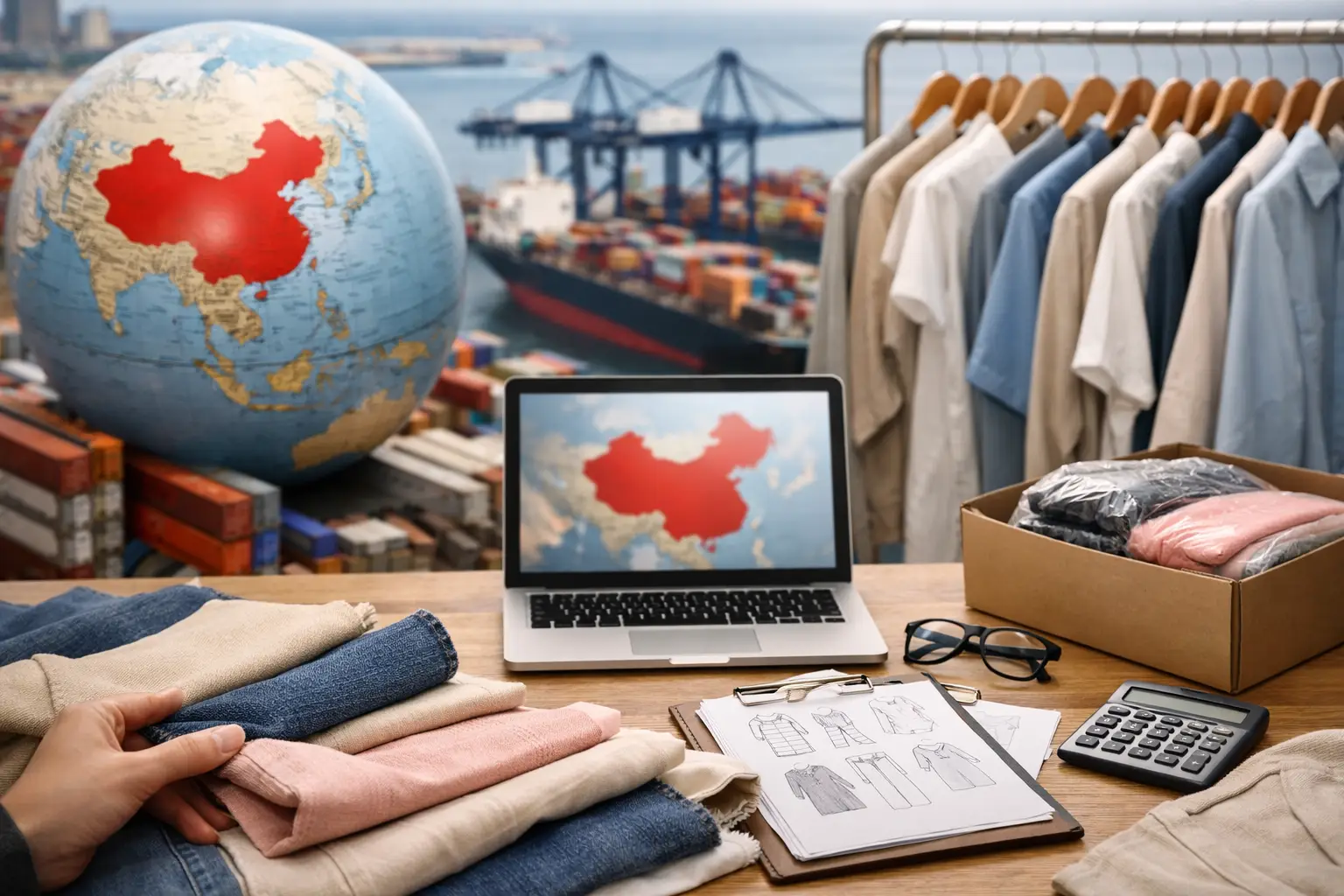
A low unit price can become an expensive order when the factory uses the wrong fabric weight, grade of zipper, fit block, or packaging standard. Knowing how to source clothes from China starts with defining the product commercially, then selecting a supplier route that fits your volume, quality target, and level of customization.
For apparel buyers, China is not one sourcing channel. It includes ready-stock wholesalers, trading companies, small workshops, specialized garment factories, and OEM producers capable of meeting international brand requirements. Each route solves a different problem. The most efficient supplier is not always the one with the lowest quoted price. It is the one whose production model matches the order you can realistically place.
Start With Product Specifications, Not Supplier Searches
Before requesting quotations, turn the garment idea into a working specification. A supplier cannot price “premium streetwear hoodies” or “women’s summer dresses” accurately without concrete production details. Vague requests invite vague pricing, sample changes, and disputes over what was included.
Your specification should identify the garment category, target customer, fit, fabric composition, fabric weight, color, size range, trims, labeling, packaging, and required testing or compliance standards. For a pair of men’s straight-leg jeans, that means more than selecting a wash. The specification may include denim composition, ounce weight, rise, thigh and leg opening measurements, stitch count, zipper brand, button finish, wash process, care label content, hangtag, folding method, and carton quantity.
A tech pack is the strongest format for custom production, but a concise specification sheet can be enough for an early supplier discussion. Include reference photos, annotated measurements, and a bill of materials where possible. Specify what is mandatory and what is flexible. For example, organic cotton certification may be non-negotiable, while the exact pocket-bag fabric may be open to supplier recommendation.
This distinction matters because suppliers often quote based on assumptions. If you do not state the required fabric weight, they may price the closest available option rather than the fabric your brand expects. A lower quote can therefore reflect a lower specification, not better sourcing.
Choose the Right China Apparel Sourcing Model
The correct production route depends primarily on order quantity and the degree of control your brand needs. Buyers often make the mistake of approaching an exclusive factory with a 100-piece order or expecting a ready-stock wholesaler to deliver a completely original garment. These are different commercial models.
Ready-Stock Wholesale for Smaller Orders
Ready-stock wholesale is usually the practical option for purchases of roughly 100 to 1,000 pieces, depending on the category and supplier. The garments are already designed, produced, and held in inventory or can be replenished from an existing production line. Buyers select from available styles, colors, and sizes, then may add limited branding such as a hangtag, sticker, woven label, or simple packaging.
This model reduces development time and lowers the financial commitment required to test a category. It is useful for ecommerce sellers, boutiques, wholesalers, and new private-label operators that need inventory quickly. The trade-off is limited exclusivity. Other buyers may have access to the same base garment, and changes to fabric, fit, construction, or color can trigger higher minimum order quantities.
Evaluate ready-stock products as finished merchandise, not as an early version of a custom design. Request actual photos or video of available inventory, confirm size ratios, inspect the garment measurements, and ask whether replenishment is possible. A style that sells well is of limited value if the supplier cannot restock it consistently.
OEM Production for Brand-Level Quality
OEM production is appropriate when you have established specifications and need a supplier to manufacture under your label. This route is often used by brands seeking consistent construction, controlled materials, repeatable sizing, and documentation that supports retail or wholesale requirements.
For buyers targeting international brand quality, an OEM pathway through an experienced, Taiwan-listed company or similarly established manufacturing partner can provide stronger process control than a purely price-led factory search. The commercial benefit is not simply the factory name. It is access to systems for sample approval, material control, production monitoring, inspection, and delivery planning.
OEM production usually requires more time and a larger commitment than ready-stock buying. Fabric sourcing, lab dips, trims, pattern correction, pre-production samples, and production scheduling all affect the timeline. It may also require minimums by color, fabric, and style. That is a reasonable trade-off when consistency and brand reputation matter more than launching with the smallest possible order.
Exclusive Factory Customization for High Volume
Exclusive factory customization is designed for high-volume buyers that need proprietary products, dedicated development, and scalable capacity. The factory can develop a custom pattern, source specific materials, create branded trims, and establish a production program around your requirements.
This route offers the highest level of control, but it also creates the greatest responsibility for the buyer. You need clear specifications, reliable forecasts, approved samples, and the working capital to support development and bulk production. High volume can improve unit economics, but only if demand is real. Ordering too deeply to achieve a lower unit cost can tie up cash in slow-moving sizes or colors.
Ask the factory which elements are truly exclusive. A custom logo label is not the same as an exclusive pattern, proprietary wash formula, or reserved fabric. If exclusivity is important, define the protected elements, territory, duration, and any development ownership terms in writing.
How to Evaluate Apparel Suppliers Before Paying a Deposit
Supplier selection should be treated as a verification process, not a catalog comparison. A polished storefront and fast replies do not confirm that a supplier controls the factory, understands your category, or can meet your quality standard.
First, confirm the supplier’s operating model. Ask whether it is a manufacturer, trading company, or wholesale seller, and ask which processes are completed in-house. A trading company can still be useful, particularly when it coordinates multiple specialized factories, but you should know who is responsible for quality, timeline, and corrective action.
Then assess category experience. A factory that produces knit T-shirts efficiently may not be the right choice for structured blazers, technical outerwear, denim washes, or lingerie. Request examples that are comparable in fabric, construction, and finishing complexity to your intended product.
Use samples to test both the garment and the supplier’s process. The first sample may reveal issues, but the response to those issues is equally valuable. Can the supplier identify the root cause of a measurement variance? Do they revise the pattern accurately? Do they document approved changes? A supplier that treats feedback systematically is safer than one that simply promises improvement.
Before bulk production, confirm these four control points:
- The approved sample and final specification are the production reference.
- Measurement tolerances are stated for critical points of measure.
- Inspection standards identify what counts as a major or minor defect.
- Packaging, carton marks, shipping terms, and delivery dates are confirmed in writing.
For larger orders, consider third-party inspection before final payment or shipment release. Inspection is not a replacement for supplier management, but it provides an independent check on workmanship, quantities, labeling, assortment, and carton condition.
Price the Full Landed Cost
The factory price is only one component of the buying decision. Your landed cost may include samples, pattern development, fabric upgrades, trims, labels, packaging, export cartons, inspection, freight, insurance, duties, customs brokerage, and domestic delivery after arrival in the United States.
Compare quotations on the same basis. One supplier may quote an ex-factory price while another includes export packing or delivery to a Chinese port. A meaningful comparison requires the same garment specification, order quantity, payment terms, and shipping basis.
Be cautious with quotes that are substantially below the market range. The difference may be legitimate if a supplier has available fabric or a more efficient production line. It can also signal substituted materials, omitted processes, unrealistic delivery commitments, or a quote made before the supplier has understood the specification. Ask what fabric, trims, wash process, and packaging are included rather than negotiating price alone.
Plan the Order Sequence
Most apparel problems begin when development, approval, and production are compressed into one rushed decision. A controlled order sequence normally moves from specification to quotation, sample, revision, pre-production approval, bulk production, inspection, and shipment.
Do not approve bulk production based only on product photos. Review the physical sample for hand feel, fit, color, construction, labels, and packaging. If the product has multiple colors or washes, confirm each one. Color variation is especially common when different dye lots, fabrics, or finishing processes are involved.
Payment terms should also match your risk level. A deposit before production is common, but the balance should be connected to agreed production milestones, inspection arrangements, or shipping documentation. Avoid making decisions based only on urgency or supplier pressure. A clear production calendar is more useful than an optimistic delivery promise.
The best first order is not necessarily the cheapest or largest. It is the order that gives your business usable evidence: whether the product sells, whether the supplier follows specifications, and whether the quality can be repeated when you reorder. Build that evidence before committing to deeper customization or high-volume production.
Leave a Reply